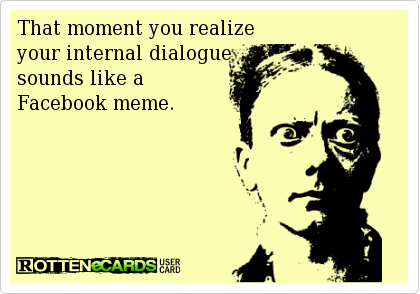
Well, it's been much too long since I've blogged and although I'd like to say that I'll be better, the reality is that life is just way too busy. When you have teenagers in the house and two jobs plus you're trying to find a literary agent who loves your characters as much as you do, blogging doesn't get high on the priority list. But really, that's okay with me. I wish I had more time to blog, but I prefer being in my made-up worlds a lot more. So, until that changes or until I magically find extra time coming from my beautiful german grandfather clock that doesn't work, but sits in my front room anyway, I'll probably only check in here once in a blue moon... or maybe a pink one, 'cause I like pink best. Here's something funny though. Just in case someone does stop in.
Drawing a Blank
Saturday, March 16, 2019
Wednesday, December 20, 2017
Potential
I’m sitting in the library, trying to write and I can’t help thinking that libraries are probably the worst place to try to finish a book. I mean, sure, they have a quiet atmosphere (most of the time), a controlled pleasant temperature, and even their seating arrangements are tolerable (at worst) though usually comfortable. But, looking around right now, I can’t help but wonder...
WHAT AM I THINKING?? WHY DO I THINK I CAN ACTUALLY WRITE A BOOK???
Look at all of these books. So many people have succeeded at what I’m trying to do and they all are a billion times better than me! O.K., maybe not ALL of them are a billion times better than me but probably ninety-percent of them are! Sigh. Why do I do this to myself? I get all ambitious and think that I can accomplish something this big (not to mention, I’m doing it during my non-existent spare time). But not only do I want to just finish this book, I’ve had actual dreams that it could be published one day.
WHO DO I THINK I AM??
But then I get a hold of myself, kick away those negative thoughts, try to pick a more uplifting song on Spotify (John Williams - Harry’s Wonderful World from Harry Potter and the Philosopher’s Stone will do nicely, thank you) and remind myself that all of the thousands of books lying in rows and rows of shelves in front of me started with a blank page, just like mine did. Not only that, but all of the authors had to write that final word that goes right before “The End,” just like I’m trying to do. So, this Charles Todd (the author whose twenty-plus books are taunting me on the bookshelf I’m currently facing), started where I did. Or even Tolstoy (yes, I’m sitting in the T section). Leo had to look at a blank piece of paper before he could write even one word.
Maybe I can do it. No, I’m definitely not Tolstoy—nor even this Charles Todd author (whom I know nothing about so please don’t Google him and/or assume I know what he writes). Have you ever thought, "I'm not fulfilling my potential." or "I know I have potential, but..." Sigh. I have. And maybe I’ll never end up with a published book, but it doesn’t hurt to try. It doesn’t hurt to have ambitions. Not only does it “not hurt to try,” but I’m growing so much as a person and a writer as I work on my novel. (Yes, even at my age.) Trying means that I’m increasing my ability and capacity to relate. To love. To hate. To empathize. To endure. To succeed. To have potential for great things. And I'm good with that.
Friday, April 10, 2015
Internal dialogue...
Here's a grammar tip on Internal dialogue:
There you go. That should be a good example of proper use and formatting of internal dialogue in a piece of writing. What is internal dialogue? and Why? How? do we use it in our writing? Well, let's find out exactly . . .
First, the definition.
I liked this definition according to theeditorsblog.net:
Internal dialogue (or Inner dialogue) is simply the speech of a character to himself. He hears it and the reader hears it, but other characters have no idea what's going on in his head. It's the same for us and our thoughts. Unless we reveal them, no one knows what we're thinking.
But did you know that there are two different types of internal dialogue?
Direct internal dialogue indicates actual quotes coming from the character.
Indirect internal dialogue would be the character's thoughts and actions without it being an actual quote.
For example:
Direct: Walton is the kindest man I know. I wish he would ask me on a date.
Indirect: The kindness Walton showed made me wish he would ask me on a date.
Now on to formatting. This can get tricky because there are several different ways you can format internal dialogue in your writing. I'll first address what looks to be the most common and easiest way according to the research I have done.
Both indirect and direct (1st person): Even though he was late for class, Walton showed a unique kindness to me when I tripped and my papers flew down the stairs. I wish he would ask me on a date.
This was written in first person but the same thing would apply for third person.
Third person: Even thought he was late for class, Walton showed a unique kindness to Lucy when she tripped and her papers flew down the stairs. I wish he would ask me on a date.
A couple of things to note in this last example. First, the direct internal thought was changed to first person. If your character is having an internal thought, they wouldn't think in third person (unless maybe your character is extremely egocentric, I guess). Second, the direct internal thought was changed to be in present tense. If your character is having a direct quote come from their head, they are not going to think about things in the past tense. This is hard to explain but to me, makes sense.
Other formatting options:
Quotation marks: Occasionally, you will see people use quotation marks to indicate thoughts. This is not commonly used but if you do decide to use quotation marks, I would highly suggest adding tags. A very few people do not use tags but it could get very confusing if you don't.
Tags: Tags define who is speaking and indicates that it is a thought. My personal opinion is that they are unnecessary and it tends to take a reader out of the story but it may be a style choice you want to make. If you do use them, here are a few rules:
When you italicize your internal dialogue remember that you do not italicize the tag. Here is an example using italics and tags:
Tags: Tags define who is speaking and indicates that it is a thought. My personal opinion is that they are unnecessary and it tends to take a reader out of the story but it may be a style choice you want to make. If you do use them, here are a few rules:
When you italicize your internal dialogue remember that you do not italicize the tag. Here is an example using italics and tags:
Walton is the kindest man I know, she thought. I wish he would ask me on a date.
Paragraphs: One final thought about formatting is to create new paragraphs. From my research, it is debatable whether you should or should not create a new paragraph when adding internal dialogue. Ultimately, you don't have to but you can if you want. It seems like direct internal dialogue should be treated similarly to regular dialogue.
When? and Why? to use internal dialogue.
Finally, I'd like to address when and why to use Direct Internal Dialogue.
This part is completely opinion but I love reading direct internal thoughts when used correctly. To me, it allows a deeper understanding, helps make a personal connection with the character, and allows for a distinct voice to come through.
Here are some great thoughts from penultimateword.com
"Most fiction is character driven, and I'm convinced that readers' most-loved fiction is that which allows us to delve into the innermost thoughts of its characters, in the process finding moments of recognition--the chance to recognize ourselves in fictional characters and identify with them on multiple levels--and discovering more about ourselves. We read fiction to see ourselves reflected back, both the good and the bad, and we're able to do that when authors allow us into the deepest recesses of their characters' minds.
And so, if you think it's not important to reveal your characters' deep thoughts, you're missing out on an opportunity unique among all the art forms to connect deeply with your audience, your readers. The success of your book will hinge on connecting with your readers, and writing meaningful inner monologue will be one of the most important things you can do to ensure this connection is made."
I completely agree with Arlene Prunkl's statement. I think we need to remember how the internal dialogue creates that connection with our readers and allows readers to relate to our story. Whether the connection happens through the good, bad, or the ugly in our lives, it's important as human beings to understand that we are not alone in this world.
There are many purposes behind when and why you might use internal dialogue but here are a couple of suggestions/thoughts to remember.
-Remember that the dialogue should either build character or help along your plot.
-Refrain from using direct internal dialogue too much but recognize how succinct it can allow information to be given.
-Above all else, remember to be consistent!! If you use italicized direct internal dialogue four times in the first chapter, you should probably try to do about the same in each subsequent chapter. However you format it the first time, remain doing the same throughout the remaining text.
Here are some great thoughts from penultimateword.com
"Most fiction is character driven, and I'm convinced that readers' most-loved fiction is that which allows us to delve into the innermost thoughts of its characters, in the process finding moments of recognition--the chance to recognize ourselves in fictional characters and identify with them on multiple levels--and discovering more about ourselves. We read fiction to see ourselves reflected back, both the good and the bad, and we're able to do that when authors allow us into the deepest recesses of their characters' minds.
And so, if you think it's not important to reveal your characters' deep thoughts, you're missing out on an opportunity unique among all the art forms to connect deeply with your audience, your readers. The success of your book will hinge on connecting with your readers, and writing meaningful inner monologue will be one of the most important things you can do to ensure this connection is made."
I completely agree with Arlene Prunkl's statement. I think we need to remember how the internal dialogue creates that connection with our readers and allows readers to relate to our story. Whether the connection happens through the good, bad, or the ugly in our lives, it's important as human beings to understand that we are not alone in this world.
There are many purposes behind when and why you might use internal dialogue but here are a couple of suggestions/thoughts to remember.
-Remember that the dialogue should either build character or help along your plot.
-Refrain from using direct internal dialogue too much but recognize how succinct it can allow information to be given.
-Above all else, remember to be consistent!! If you use italicized direct internal dialogue four times in the first chapter, you should probably try to do about the same in each subsequent chapter. However you format it the first time, remain doing the same throughout the remaining text.

Thanks for reading along! And don't forget to JUST WRITE SOMETHING!
Wednesday, December 24, 2014
Watch the stages to help with your pages!
How can theater, acting, and the stage help your writing? Acting and writing are so incredibly similar. Two different ways of storytelling. Obviously, I’m not the first person to connect or compare the two but I enjoyed looking at one to help reinforce the other. It’s another way to help wrap our brains around making stories and hopefully, increase our abilities, right?
In the podcast Writing Excuses, season 3 episode 14, Mary Robinette Kowal talks about puppetry and what the five principles of puppetry and how they apply to writing.
Go here to listen to the actual podcast…
Here is my lengthy summary and sometimes my own words/thoughts added in…
Mary Robinette Kowal - The 4 Principles of Puppetry
1. Focus –
Focus indicates thought. What you show the audience is what they have to think about. You can only show them one thing at a time. So, what you are having your audience focus on (or what your puppet/character focuses on) needs to be the most important thing happening at that moment.
2. Breath or rhythm –
indicates emotion. In puppetry, how you breathe indicates what is going on. A sigh can indicate love or frustration. Panting can indicate physical exhaustion or excitement. When you write, the rhythm you use can help create the pacing AND the tone of the story. For example, if you use short, choppy sentences, you are going to create a faster pacing and rhythm.
3. Muscle –
Muscle creates the illusion that a puppet (or character) is moving on their own. If the audience can see the puppeteer (aka author), then their suspension of disbelief is ruined. So you need your characters to have solid motivation. Actions and reactions need to happen because that is what the character would naturally do, not because it’s what the plot requires. Also, you need to consider what the physical consequences are to your setting. Make sure it makes sense to have things located in their proper places. Mary gives the example of having a tannery in the middle of a village. It wouldn’t happen because the uric acid being dumped into the streams would drive the neighbors in the village crazy. An author shouldn’t plan something like that (having a tanner in the middle of a village) just for convenience.
4. Meaningful movement –
your body language and movement needs to have a purpose. In puppetry, bobbing a head every time it speaks conveys no information. If a character picks up a water glass, there has to be a reason to go for the water glass at that moment – either emotional content, plot content, or some other meaning. Mary gives the following example:
“I don’t like what you’re saying to me.” She looked away from him. “I don’t understand it at all.”
This is not meaningful movement. What is she looking at?
“I don’t like what you’re saying to me.” She fiddled with the knife on the table. “I don’t understand it.”
Here, that fiddling with the knife on the table immediately starts to tell you what she’s thinking about. If she’s going from her thoughts to ‘I need to play with this knife. . . ‘ Much more meaningful movement.
5. Practice -
I’m not sure if they didn’t get to the fifth principle or what but the last thing mentioned was a writing prompt. So, I’m going to say that the fifth principle is to PRACTICE which obviously translates into writing.
All of her thoughts on puppetry led me to think about the stage and theater and how those things can relate to writing. For example…
Blocking
Blocking is a term used both on the stage and on the page.
a. In theater, the definition is the movement and/or positions the director determines for proper dramatic effect.
b. In a book, it is placement of characters in the scene.
When you are blocking a scene on stage, there are a few important basic elements to try to remember…
1. You should be able to see all of the characters on the stage during a scene. Not necessarily all at the same time, but all of the characters on the stage need to be important to the scene otherwise, what’s the point of even being there. So, they should be viewed by the audience at some point. Similarly, when writing a scene in a book, every character needs to have a purpose. For example, say J.K. Rowling was to write a scene in potions class. Obviously, any student in the scene would have a purpose because they are actually taking the class but if she then threw in say, Hagrid, he would need to have a reason to be there. He shouldn’t be there just because Jo (can I call you Jo?) likes the character of Hagrid. Also, it would be odd if the scene focuses on Harry alone and the other students are never even mentioned when he and they are all supposed to be in class. Not that this scene could never happen, but hopefully, you see my point.
2. The blocking should help feature the correct actors at the appropriate moments.
There are so many ways to feature actors on stage. It can be done with lighting, or by everyone else on stage looking at the featured actor, or by movement, or even by just locating the actor center stage. BUT, if the director doesn’t choose the correct blocking, the whole mood and meaning of the scene can be ruined. Likewise, when writing the appropriate characters should be featured at the appropriate times. This one seems like a no-brainer, but I have read things in the past and wondered because the scene to me would come across much stronger if it was from a different point of view or if the author had focused on a different character.
3. Blocking should create a stage picture.
At any point during the show, you should be able to take a picture of the actors on the stage and be able to tell what the actors are doing with explanation. (Just a side note – I love this because I happen to adore doing stage photography. It’s one of my hobbies besides writing.) Directors work to make sure actors are at different heights, different poses, and in different locations to help create interest, mood, and emotion. There are many ways to liken this in your writing. One obvious way is to vary your settings, another is to make sure your characters are unique to each other and not just in the way they look but also in their movement, habits, flaws, and strengths. (This next comment comes moreso from film but also applies.) Take into consideration what angle your audience is viewing the scene and how might they get the best advantage for the action. Creating “stage pictures” in your writing can polish your scenes.
Ok. I think I probably could go on and on and this is only ONE stage term. There’s also casting, directing, exposition, masking, the proscenium arch, run time, etc.
Next time you go to a theater production, take time to recognize the story-telling aspects that you can use to improve your own writing. I’m sure you’ll come away from the stage with plenty to use on your page.
Friday, September 19, 2014
Idea sources?
I got to post for the first time on my writing group's blog in July. I'm finally taking the opportunity to share it here on this blog. I might even share it with people this time. Ha ha!
Something authors get asked often is, “Where do you get your ideas?” One time, I helped set up an author’s visit to my kids' school. Brandon Mull was coming to speak and he asked us to have the kids come up with questions for him to answer. Without time to have every question answered, we sifted through them to find some of the most interesting. The person I was “sifting” with was a friend of mine who along with her husband often assisted Brandon with his school visits. She told me to throw out the question, “Where do you get your ideas?” because Brandon got asked that all the time and it wasn’t worth taking time for. Sure enough, that question appeared in about one of every five questions. At the time, I wondered why he wouldn’t want to answer it – especially if so many kids asked.
b. Word association. Write down one word. Then write the next word that comes into your mind, and the next, and the next. For example…
OK, OK, tons of ideas and possibilities out there. Finding that one BIG IDEA isn’t as important but we all need to feel inspired and find creativity with our writing. I feel like I have only scratched the surface with all of this but hopefully, there is a start here; a direction to follow if the need should arise. Lastly, and most importantly…
Where do you get YOUR ideas?
Something authors get asked often is, “Where do you get your ideas?” One time, I helped set up an author’s visit to my kids' school. Brandon Mull was coming to speak and he asked us to have the kids come up with questions for him to answer. Without time to have every question answered, we sifted through them to find some of the most interesting. The person I was “sifting” with was a friend of mine who along with her husband often assisted Brandon with his school visits. She told me to throw out the question, “Where do you get your ideas?” because Brandon got asked that all the time and it wasn’t worth taking time for. Sure enough, that question appeared in about one of every five questions. At the time, I wondered why he wouldn’t want to answer it – especially if so many kids asked.
I’ve since discovered that it really is just not a good quality question to ask because most of the time, authors don't know exactly how to answer. Most authors are prepared to answer it anyway because it doesn’t go away. Some say things such as – “everywhere” or “daydreaming” or even some odd place like “Pooghkeepsie.” Probably my favorite answer was given by Neil Gaiman when he said, “What you do is, 11:58 at night, you go down to the cellar. You roll the goat bones. There’ll be a banging on the door. It will open and this thing will fly in. It will explode. You’ll have a something like a chocolate. You eat it and you have an idea… I don’t know. You make it up out of your head.” You can watch his entire answer to this question HERE…
You see, I’ve worried about my ideas. I have A LOT of ideas but I wonder – are they good enough? Will my ideas come across to everyone else as boring, overdone, or cliché? Do I have anything original in me or will I only ever be able to produce regurgitated material? Is it ALL about that ONE idea? Do I have to have that one brilliant idea in order to succeed?
Jim Butcher says it definitely is NOT all about that one idea. He argued that even if your idea has been done a lot, you can still put your own spin on it and get a new and vibrant story out of it. There were others who argued with him that “The Idea” was what was most important; that even if you are a horrible writer, when you have a brilliant idea, your book can be successful. And so, someone challenged Jim by giving him two “horrible” ideas with which he was supposed to create something new and vibrant. The ideas given to him were Pokemon and the The Lost Roman Legion. Jim went on to create and sell a 6 book successful series based off of those “horrible” ideas. He has also rocked the New York Times Bestsellers List and has published around 30 books not including short stories and comics. I think he has proved his point. (You can watch him narrate this story HERE...)
But, what if you get stuck? You’ve worked and worked and all of a sudden, nothing comes? Or what if you have too many ideas? You just don’t know where to begin or where to continue?
There are tons of ways to organize yourself before you start a book. There’s drawing an arc with plots points and character profiles and the Save the Cat method and all kinds of outlining and other ideas but I’m not really talking about organizing here. (Though being organized can be very helpful to many authors. Some detest it and only write in the dead of night with hair standing on end while bags under their eyes grow larger and larger frantically scribbling before their muse leaves them for another year, but again, this is a separate topic.)
What I want to talk a little about is gathering that inspiration and how to use it over and over.
Here are some great tools, activities, and tidbits to help you organize your ideas and find inspiration in the things around you…
1. – Inspiration board/ Smash journals/Pinterest/ etc…
These are obvious (I think?) but if you are stuck or need some organization, here are some great examples of crafts or online opportunities to increase that inspiration and find direction…
- Inspiration Boards – Sometimes being able to touch and see textures, patterns, and colors is all that is needed to jumpstart you toward the next section in your book.
I borrowed these images from www.alwaysvery.com...
And these from www.everythingetsy.com...
- Smash journals - These are the same idea as an inspiration board only in journal format. You can also collect your daily mementos, such as concert tickets, restaurant napkins, or a smear of your current favorite eye shadow while finding inspiration for future projects.
This one I found floating around without a credit… sorry to whomever created it…
- AND of course, there is PINTEREST - I am linking my book board (which up until just now has been private) to see how pinterest can help inspire your current project…
Many authors have pinterest boards. Check out…
Marissa Meyer - http://www.pinterest.com/marissameyer22/
Lucinda Brant - http://www.pinterest.com/lucindabrant/
Abbi Glines - http://www.pinterest.com/abbiglines/
Marie Lu - http://www.pinterest.com/mreefish/
Hunter S. Jones - http://www.pinterest.com/huntersjones/
Deborah Harkness - http://www.pinterest.com/debharkness/
Emily Giffin - http://www.pinterest.com/emilyfgiffin/
Jennifer Weiner - http://www.pinterest.com/jenweinerbooks/
Meg Cabot - http://www.pinterest.com/megcabot/
2. – Brainstorming activities…
These are just a few activities (there really are so so many) I have collected from authors on how to break out of a slump or how to discover more about your book…
- Giving Life to Characters by Shannon Hale http://www.squeetus.com/stage/mince_characters.html
Shannon has suggested that a great way to get to know your characters is to give them a personality rating. There are several different systems that you can give them.
Here is one to try…
or
- Writing Prompts by Writing Excuses
Writing Excuses is a podcast on all things writing done by Brandon Sanderson, Dan Wells, Mary Robinette Kowal, and Howard Tayler. Not only do they have ingenious advice on writing, they also give writing prompts for each episode. Sometimes the prompts are a little out there they may just be what you need right then.
- Keep an “Idea” folder by Brandon Sanderson
Brandon has talked about keeping an idea folder where he puts all of his ideas. He has talked about how he will look at that folder and then try to combine two of the ideas together. This is how he attributes most of the concepts for his books.
- One final idea for helping jumpstart your creativity is to do Brainstorming activities. Here are some examples…
a. First line story starters. Open up a book nearby and write down the first sentence or you can even pick out a sentence in the middle of the book then continue to write your own version of what comes next.
b. Word association. Write down one word. Then write the next word that comes into your mind, and the next, and the next. For example…
Cinderella, shoe, foot, ankle, joint, attached, detached, fix, mechanic, robot, cyborg, half-man, handicapped, etc. (This was my attempt at a start for word association generating the idea of Cinder by Marissa Meyer.)
c. Acting. Take a piece of a scene (your own or someone else’s) and act it out. You can ask others to help you with this and it can be fun. Afterward, write down how you felt and what happened as you experienced it.
OK, OK, tons of ideas and possibilities out there. Finding that one BIG IDEA isn’t as important but we all need to feel inspired and find creativity with our writing. I feel like I have only scratched the surface with all of this but hopefully, there is a start here; a direction to follow if the need should arise. Lastly, and most importantly…
As Henry Miller said...
Monday, February 10, 2014
My first post...
Subscribe to:
Posts (Atom)